
BETWEEN ‘SUN LE’ AND ‘KOI NA SUNE’ | THE WORLD OF HAVI
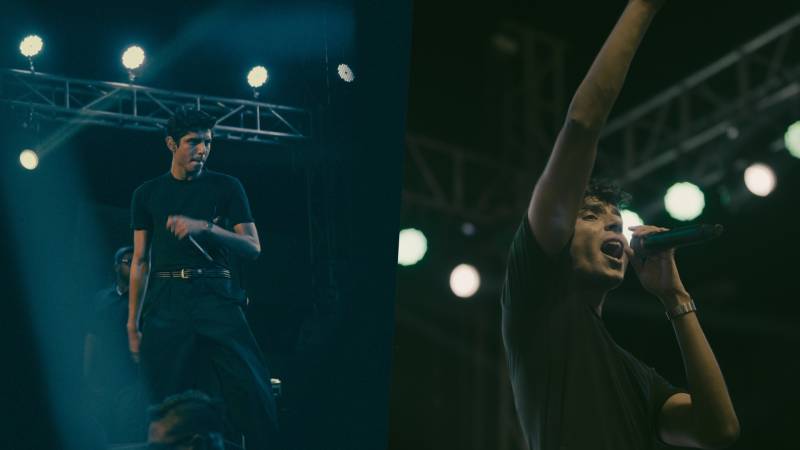
There are artists who make music, and then there are artists who craft entire worlds. Havi belongs to the latter. His songs are less singles and more chapters, each one unraveling the psyche of a character he insists is both himself and something beyond him. Over the past year, he has gone from releasing five originals to performing hundreds of shows across Pakistan, building not only a discography but also a mythology. Sitting down with HELLO! Pakistan, he traces the journey of Havi, the character, the musician, the restless observer and what it means to live through songs.
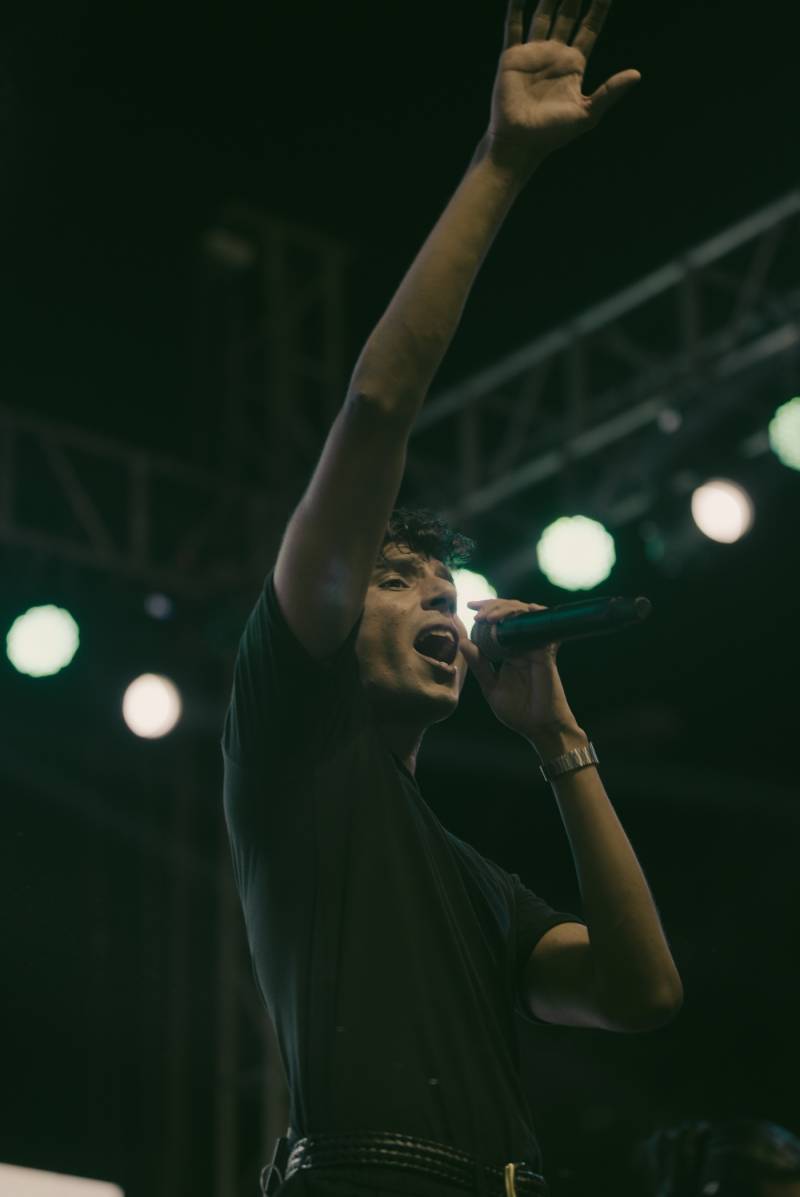
Every disguise is a self-reflection. Havi carries all the good and bad qualities I have as a person
Havi insists that the persona of “Havi” is not a carefully curated mystery but simply a story unfolding in real time. “Havi is a character in the story I’m telling. He goes through different phases of understanding his own struggles and emotions, as well as the human psyche as a whole. I’m just writing as I go along, and I want people to explore it with me. Nothing is designed, it’s all organic,” he says. For him, the so-called mystery is simply self-projection: “Every disguise is a self-rejection. Havi carries all the good and bad qualities I have as a person.”
From ‘sun le’ to ‘koi na sune’ real quick — my songs are just different stages of being heard and not being heard
This year has seen his journey move from Abyss to Moon, then to Saat Din. He explains the arc with surprising precision: “Havi falls in Abyss. In Moon, he realizes the gravity of what’s happened. That leads to the existential crisis in Saat Din, which asks whether a new form of life, Havi himself, is even necessary. It’s about ego death. In Abyss he says, ‘tum ne suna jaise, hum ne kaha nahi waise,’ then in Moon he pleads, ‘sun le,’ and finally in Saat Din concludes with ‘koi na sune.’ It’s a definite progression.”
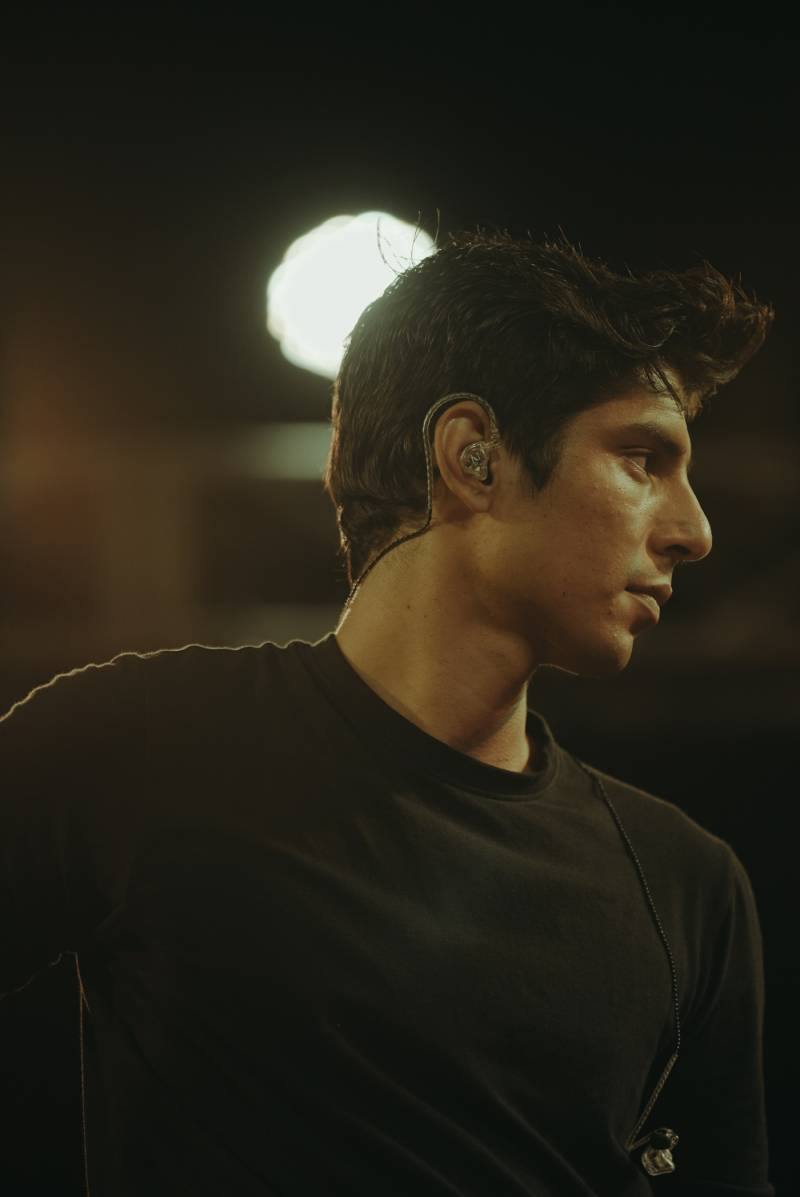
Lyrically, Farz has resonated the loudest, especially the haunting line, “is ghar mein roz ek cheez toot-ti hai.” Inspired by Jon Saahb’s words, Havi saw it as both homage and reflection: “Every time something broke around me, I would wonder about the legitimacy of my life. But I realized that things breaking is part of life’s cycle, progression itself sometimes looks like destruction.”
Things breaking is part of life’s cycle, sometimes progression looks like destruction
His other tracks, Moon, Saat Din, and Wo Raat, he visualizes as cinematic moods: “Moon is desolation, demise, and rebirth at the same time. Saat Din is confusion and stagnation, the feeling of being stuck. Wo Raat is a failed attempt at reconciliation.”
On stage, I feel like a doctor: I want people to re-live their lives with new eyes
A year into live performances, Havi’s trajectory has been staggering. What began with a 40-minute set at 432 has now expanded into hours of plugged, full-band shows. “We’ve probably done 200–300 shows across Pakistan,” he reveals. “It looks shiny from afar, but it’s exhausting. Singing itself is physically and mentally taxing, but then there’s crowd interaction, synchronization, the responsibility of making sure the audience is in sync with you. It’s draining but this is the life I chose.”
Na Miley taught me that even pain isn’t equally distributed and people understood that
On stage, he likens himself to a doctor: “You’re in front of thousands who you don’t know, yet you can tell them what ails them. I want them to revisit their lives with new eyes, to re-feel emotions in a meaningful way. That’s the real purpose of my sets, not just to sing songs, but to make people re-live their own stories.”
I never decide the mix before writing. The song reveals its own face
Still, his creative compass remains unpredictable. Na Miley, a song he thought might not connect, ended up striking a deep chord with listeners. “It talks about how nothing in the universe is equally distributed, not even pain. People understood that, which was a surprise for me.” His process, though, remains fluid. “I never decide the mix of genres beforehand. The blend reveals itself as the song unfolds.”
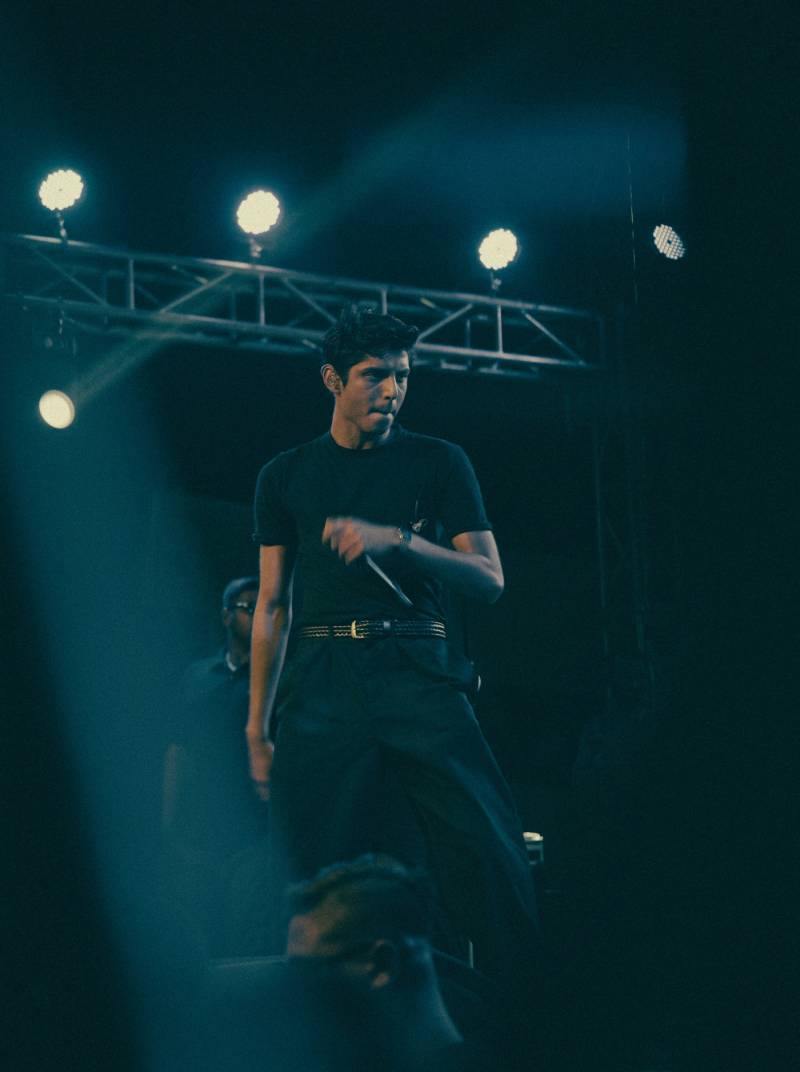
Performing looks shiny from afar, but it’s exhausting to the point where you don’t want to move some days
If his music seems to echo youth culture in Pakistan, he shrugs it off. “I’m not consciously trying to shape identity. I’m just working on myself and putting that into my songs. If it resonates, that’s good, I hope it inspires others to work on themselves too.”
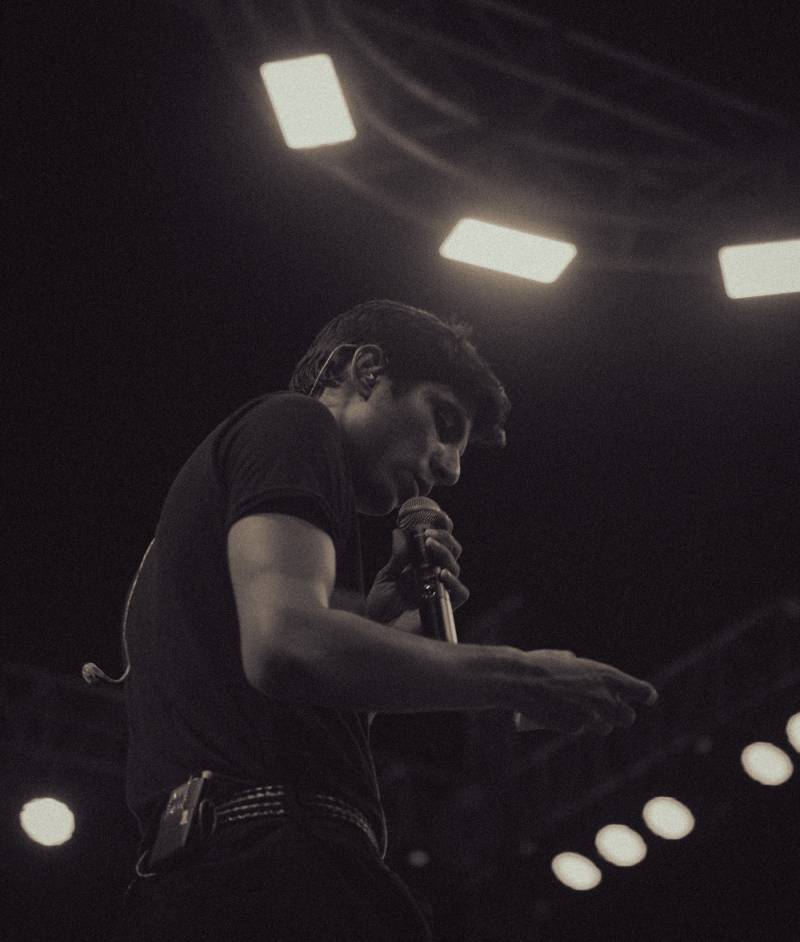
I don’t keep myself balanced. I’m absolutely imbalanced, just doing the best I can
The evolution of Havi’s sound has also been powered by his band, Brad, Nohl, and Danish. “They give me the bed to shine. They understand the soul of what I’m doing and that’s what makes us work so well together,” he says warmly.
I’ve never tried to make a personality. I’ve just been honest on the mic
Yet beneath the stage energy lies a man who admits he’s “absolutely imbalanced.” Between writing, recording, and relentless touring, he is simply trying to stay afloat. “Everyone has a tough battle. I’m just fighting mine, and doing the best I can.”
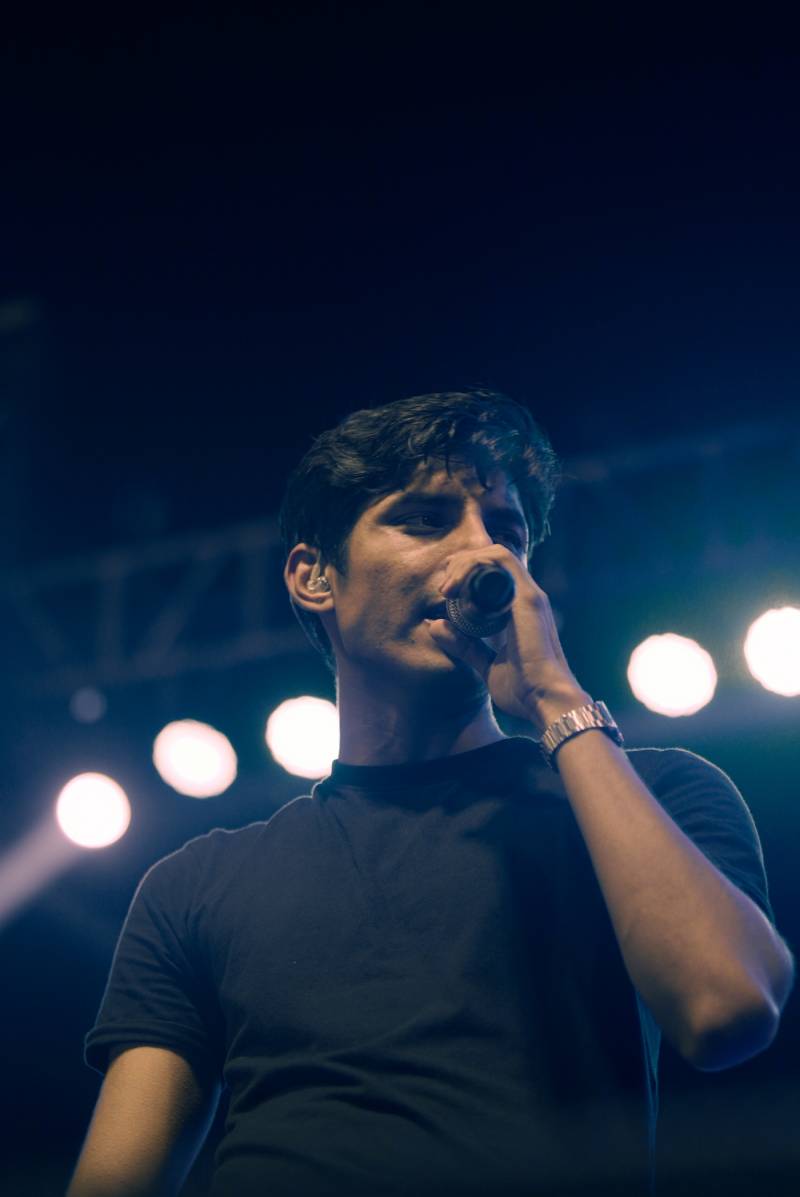
When asked if Havi is a character separate from the man behind the mic, he rejects the idea of glorification. “Havi’s outlook on life is defined by his mental model of the world, an amalgamation of experiences and inspirations. That doesn’t differ much from me. I like peace and quiet off stage, and on stage, people can tell that too. I’ve just been honest on the mic.”
October’s release? All I’ll say is it’ll be a different taste
And as for what’s next? Havi teases October’s release only with a sly smile: “It’ll be a different taste.”
RAPID FIRE ROUND
Biggest pet peeve in the studio
Wires
First song memorized word for word
“O Re Piya”
Night owl or early riser
Night owl, late riser
Go-to midnight snack
Just a cigarette
Word overused in conversation
“Yaar”
Hidden talent
Gaming
Favorite city to perform in
Lahore
Most-used emoji
Laugh emoji
One thing you’d never leave home without
Clothes (and phone) (Laughs)
If not a musician, you’d be
A writer
Interview: Sundus Unsar Raja
Coordination: Nimrah Sikander
Photos: Hamad Hashmi
Coordination: Namrah Sikander