
It’s Not Dating, We’re Just Talking Inside Pakistan’s Hidden Dating Culture in 2026
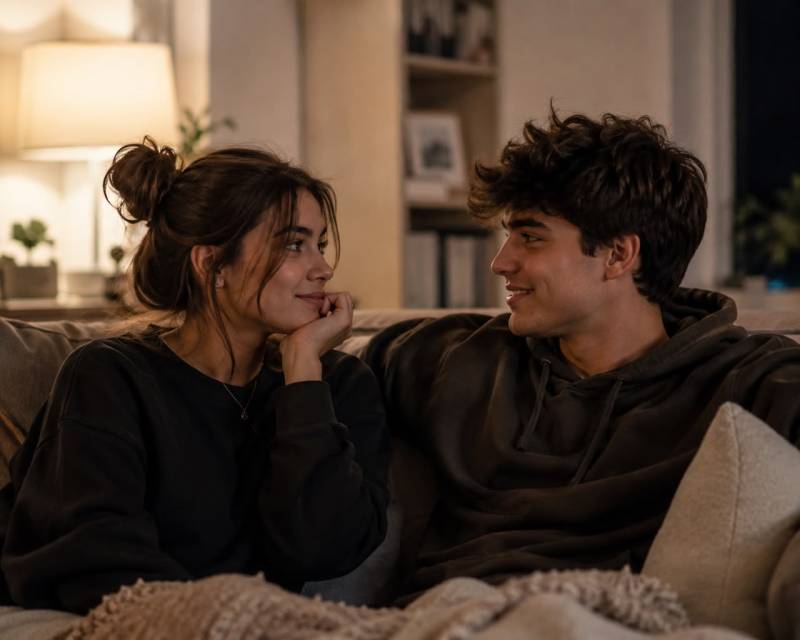
There is a particular kind of Pakistani conversation that begins with “Don’t tell anyone.”
It usually involves a name.
Someone from university. Someone from Instagram. Someone a friend introduced. Someone they have been talking to for months but still describe as “just a friend” when their mother walks into the room.
Because in Pakistan, dating has a language problem.
We date. We just do not always call it dating.
We call it talking. We call it getting to know someone. We call it friendship. We call it a rishtawhen things get serious enough for the families to become involved.
And sometimes, we call it nothing at all.
In 2026, Pakistan’s romantic life is happening in the gap between what people publicly say and what they privately do. The country may still have a deeply rooted rishta culture, but young Pakistanis are finding increasingly creative ways to meet people on their own terms.
The phone has quietly become the new matchmaker, meeting place and sometimes accomplice.
Instagram is where someone first catches your attention. WhatsApp is where the conversation moves. A university class, an office, a mutual friend or a wedding becomes the excuse to meet. Dating apps exist too, although using one openly can still feel like announcing to the entire world that you are looking for a relationship.
That is why Instagram can feel safer.
You are not technically dating.
You are just following each other.
Then someone starts liking every story.
Then comes the reaction to a song.
Then a “hey”.
Then conversations that somehow stretch until two in the morning.
Then comes the question neither person wants to ask directly.
“Are you talking to anyone?”
This is where Pakistani dating becomes different from the glossy version of dating we see online. A relationship can become emotionally serious long before it becomes socially real.
There may be no first date.
There is just a slow movement from public to private.
And for many young Pakistanis, particularly women, that privacy is not simply about romance. It is about protection.
A 2025 study looking at Pakistani women using Bumble found that dating apps could give women greater control over initiating conversations and choosing who they interacted with. But participants also described stigma, harassment and uncertainty about the intentions of people they met online.
The swipe can give you choice.
It cannot tell you who is on the other side of the screen.
That uncertainty has become increasingly important as more of Pakistani life moves online. In March 2026, Pakistan launched its National Strategy to Counter Technology Facilitated Gender Based Violence. According to the UNDP, Pakistan recorded 135,000 cybercrime complaints in 2024, with issues including harassment, cyberstalking, impersonation and image based abuse.
For anyone dating secretly, the consequences can be especially frightening.
A private photograph can stop being private.
A conversation can become a screenshot.
A fake account can become a real problem.
Someone can disappear with your trust and leave you with a digital trail you never expected to exist.
This is the side of Pakistan’s dating culture that rarely makes it into conversations about young people becoming more liberal.
Because the story is not simply that Pakistani Gen Z is dating.
The story is that Pakistani Gen Z is trying to figure out how to date while still living inside families, traditions and social expectations that were built around a very different idea of romance.
And the contradictions are everywhere.
A woman can want independence and still want to get married.
A man can reject traditional gender roles and still want his parents involved.
Someone can believe in choosing their own partner while still worrying whether that partner will be accepted by their family.
Someone can secretly fall in love and still hope the eventual ending is a respectable rishta.
This is why calling Pakistan’s emerging dating culture “Western” misses the point.
Pakistanis are not simply importing dating.
They are adapting it.
The traditional rishta has not disappeared. It has gone online.
In recent years, matrimonial platforms have grown by offering something that sits between arranged marriage and dating. People can search, talk and decide for themselves while still framing the ultimate goal around marriage.
Reuters reported in 2024 that a matchmaking event in Lahore attracted around 100 young Pakistani singles. The organiser, Muzz, said Pakistan was its second largest market after Morocco, with more than 1.5 million users in the country.
That number tells a more interesting story than the usual “young people are rebelling against tradition” narrative.
Maybe they are not.
Maybe they simply want more say in who they marry.
There is a difference.
The Pakistani dating story is therefore not really about dating apps versus rishta aunties.
It is about control.
Who gets to choose?
Who gets to say no?
Who gets to meet someone before the families become involved?
Who gets to decide whether a conversation becomes a relationship?
And who gets blamed when something goes wrong?
For women, those questions can be particularly complicated. The freedom to meet someone online comes with a calculation that many men may never have to make.
Is this person actually who they say they are?
Will they respect my boundaries?
What happens if they find my Instagram?
What happens if someone in my family finds out?
What happens if I say no?
The romance is only half the story.
The other half is risk.
And yet people continue to swipe, message, meet and fall for each other.
They do it because loneliness exists here too.
So does curiosity.
So does attraction.
So does the very ordinary desire to meet someone who understands you.
Pakistan has never been without love stories. It has simply had fewer places to talk openly about them.
Now there is a screen.
A private chat.
A disappearing message.
A dating profile hidden behind a phone password.
A generation that has grown up watching the rest of the world date, marry, break up and fall in love online is creating its own version of intimacy.
It is messier than Instagram suggests.
It is more conservative than the West might assume.
It is more modern than older generations might realise.
And it is happening everywhere, from university campuses to corporate offices, from Lahore coffee shops to Karachi apartments, from anonymous dating profiles to conversations that begin with something as innocent as a story reply.
So, are Pakistanis dating?
The answer depends entirely on who is asking.
Ask someone at dinner with their parents and you may hear, “No, obviously not.”
Ask the same person at 1 a.m. when their phone lights up with a familiar name and the answer might be very different.
Because in Pakistan in 2026, the most revealing relationship status may not be single, married or engaged.
It might simply be:
“I’m talking to someone.”
And everyone knows what that means.