
Where Lyari Finds Its Voice In Conversation with Abu Aleeha & Ayesha Omar
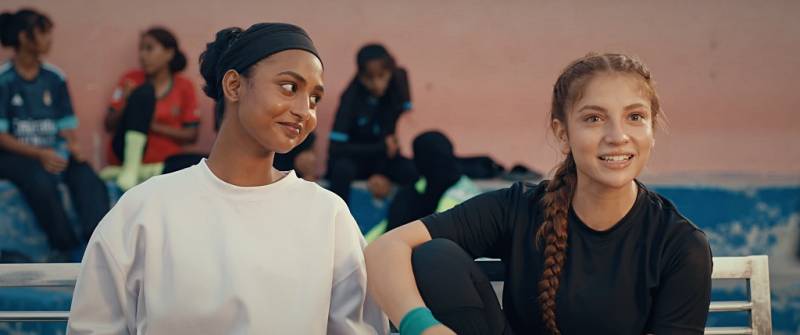
With Mera Lyari, Ayesha Omar and Abu Aleeha attempt to move beyond the familiar cinematic gaze attached to Lyari, shifting focus instead toward the girls, ambitions, and everyday resilience that exist within it. Rooted in football, female friendships, and the realities of navigating societal expectations, the film brings together local talent and lived experiences to tell a story grounded in authenticity rather than spectacle. In conversation with HELLO!, executive producer Ayesha Omar and writer-director Abu Aleeha walk us through the making of the film, the challenges of shooting within Lyari, their evolving creative collaboration, and the emotional truths they were determined to preserve on screen.
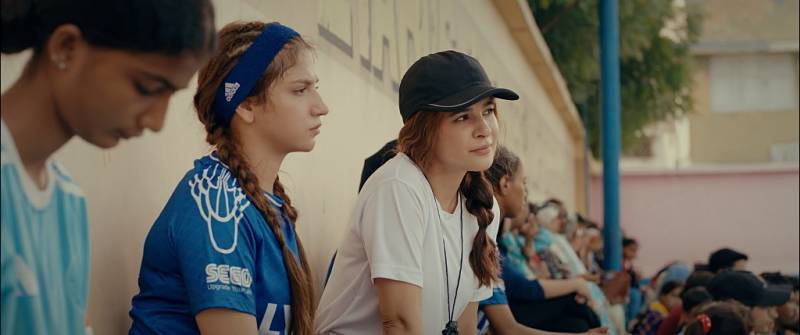
“Lyari is a neighborhood which is very widely misrepresented, misunderstood, and people have a lot of misconceptions about it, and there’s fear connected to it. It’s been falsely represented also, especially in the recent film you’ve seen, Dhurandhar, where a false narrative was also created. I wanted to show the true essence of Lyari." - Ayesha
Ayesha Omar
Producer & Actor 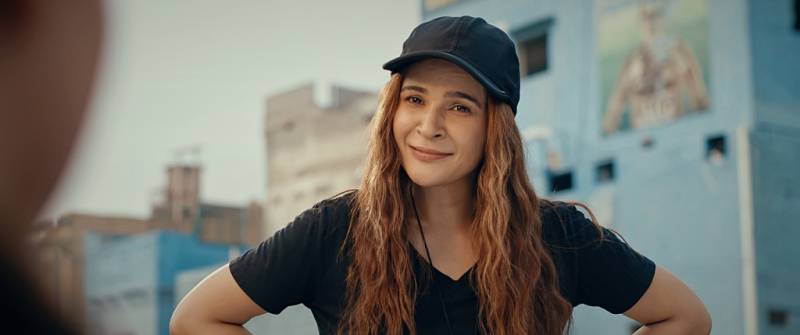
Some stories don’t arrive as scripts. They arrive as a feeling that refuses to leave. For Ayesha Omer, Mera Lyari was one of those rare moments where instinct and conviction aligned instantly. The decision to back it was never a slow calculation. It was immediate. “Whenever I’m being narrated a story or I listen to a story, if it grabs me instantly, then I’m sold,” she says. When Abu Aleeha first narrated Mera Lyari to her, it was originally called Behnaaz during early development and grant applications, and she connected with it instantly because it focused on four women from Lyari and a world she felt needed to be seen differently. Ayesha is clear that the film was in the works long before any external cinematic conversation around Lyari resurfaced in popular discourse, including Bollywood’s Dhurandhar. She notes that their shoot had already been completed around a year earlier, and at that time there was no influence of any other film or narrative shaping their intent. For her, the motivation was always internal and purpose driven, rooted in telling Lyari as she experienced it through research and immersion, not through competing portrayals. “Lyari is a neighborhood which is very widely misrepresented, misunderstood, and people have a lot of misconceptions about it, and there’s fear connected to it. It’s been falsely represented also, especially in the recent film you’ve seen, Dhurandhar, where a false narrative was also created. I wanted to show the true essence of Lyari,” she explains, emphasizing that despite struggles, lack of infrastructure and limited opportunity, there is immense talent, positivity and a progressive mindset that rarely gets a platform. That intention translated into a production process that was both immersive and demanding. Casting stretched over months of coordination as actors’ dates repeatedly failed to align, yet she describes it as a process that eventually unfolded almost naturally once commitment solidified. “We were constantly coordinating with the actors for almost two months, and finally we were able to get everyone’s dates aligned. Even then, the shoot ended up being spread out over two to three months, although the actual filming period was only about one month, but we made it happen. And I feel that once I made up my mind and decided to do it, everything became easier in a way, and doors began to open.” The shoot itself was physically intense, with filming taking place in Lyari’s open environments where crowds would gather around the set throughout the day, turning each shoot into a shared public experience rather than a closed set. Travel was another major challenge, with long hours spent commuting through Karachi traffic after sunset shoots, sometimes taking up to six hours to reach home due to rush hour congestion and distance from the shoot location. Extreme heat during peak Karachi summer months added further strain, especially as most of the shoot took place on ground locations. Despite these conditions, she emphasizes that authenticity was never compromised. “Sixty percent of the cast is from Lyari, and they also got a chance to showcase their talent.
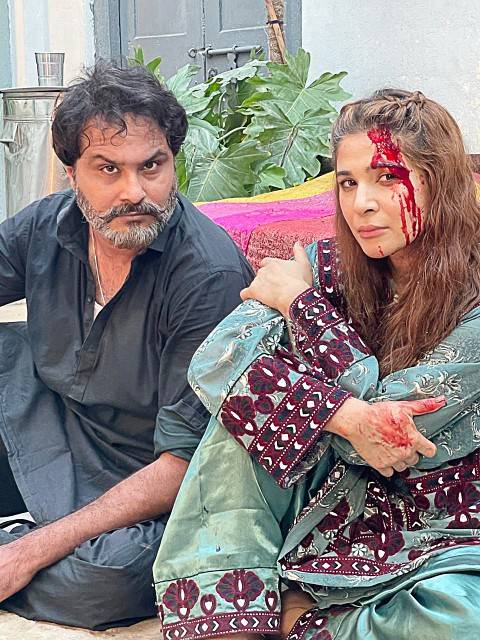
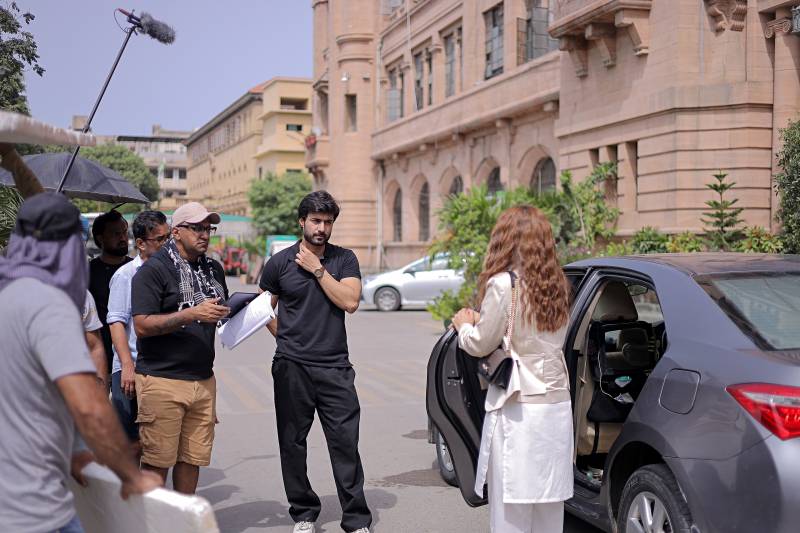
They were extremely happy to be part of the film and worked very hard throughout the process. We also had football coaches who were actively involved on set, helping with training, conducting workshops, and guiding everyone, including training Dananeer and Trinette, as well as supporting the football sequences and match choreography.” Balancing her dual role as executive producer and actor was, in her words, the biggest challenge. “Even injuries became part of the production’s reality. At one point, Dananeer suffered a muscle spasm due to inadequate warm-up during physically demanding scenes, which forced the team to cancel the shoot for two to three days.” For Ayesha, moments like these underscored the unpredictability and cost of shooting on location, where every delay carries both logistical and financial weight. Acting required emotional immersion, while producing required constant external awareness of everything happening on set. From resolving wardrobe issues and missing costumes to managing interpersonal conflicts, delays, miscommunication and emotional tensions within the crew, she found herself constantly mediating across departments. It was exhausting, but also deeply instructive, and made her reflect that in future she would prefer to separate acting and production entirely to allow more focused attention to each role. Her collaboration with Abu Aleeha has evolved significantly over time. “I’ve worked with Abu Aleeha on three projects now, starting with Javed Iqbal, Taxali Gate, and now this. We’ve seen each other’s evolution, because we did Javed Iqbal together about six years ago, and we have really grown both as individuals and as a team. It’s brought us to a much closer place where we truly understand each other.” She describes a creative relationship built on trust and experience, where both have witnessed each other’s growth over the years. What began with early disagreements has gradually turned into a working rhythm defined by understanding when to speak, when to step back and when to trust the other’s instinct. “We understand each other,” she says, noting that while differences in perspective still arise, they are resolved through discussion rather than conflict. For Ayesha, Mera Lyari is ultimately about shifting perception without distorting reality. She is clear that the film does not aim to romanticise struggle or flatten complexity, but to hold both truth and hope together. It shows difficulty, but also resilience, ambition and the possibility of change. “I am a feminist,” she says, explaining that her belief has always been rooted in women reaching their full potential, believing in themselves and empowering each other. At its core, the film follows four women navigating societal expectations, personal struggles and systemic limitations while continuing to push forward through determination rather than rebellion alone. What she hopes most is simple. That audiences walk away with hope. The belief that women can achieve what they set out to do, and that even in the most misunderstood environments, possibility always exists.
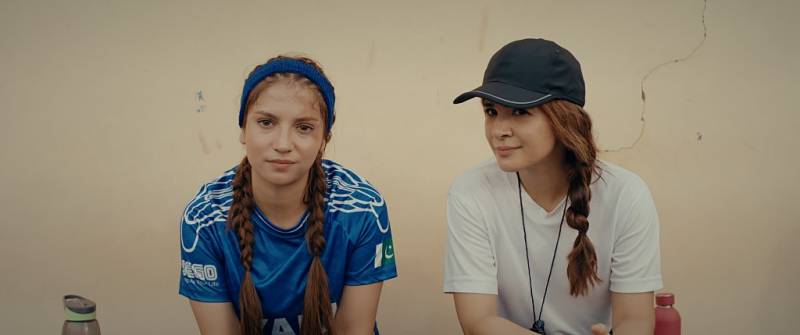
“I’ve worked with Abu Aleeha on three projects now, starting with Javed Iqbal, Taxali Gate, and now this. We’ve seen each other’s evolution, because we did Javed Iqbal together about six years ago, and we have really grown both as individuals and as a team." - Ayesha

Abu Aleeha
Script & Director
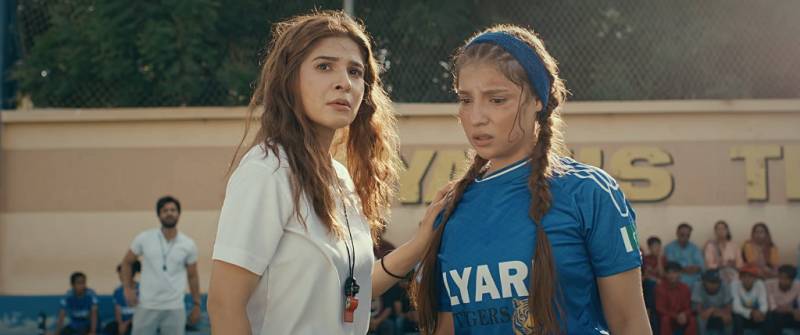
For Abu Aleeha, Mera Lyari did not begin as a film about football. It began with observation. Having already spent time working in Lyari on previous projects, including a film centred on a female boxer starring Sonya Hussyn, his engagement with the neighbourhood had been ongoing rather than incidental. It was during those earlier shoots that something shifted. “I observed a lot when I was there,” he says. What stood out most was not what he had gone looking for, but what he hadn’t expected. “I noticed that the strongest trend among girls in Lyari was actually football rather than boxing, rap music, or any other sport. Then, when I saw the small grounds in Lyari, and the football fields in different neighborhoods, and watched young girls playing football there, I felt that the story of one of these girls should be told and brought in front of people.” That moment of recognition became the film’s first defining decision. Not as a conceptual pivot, but as a response to what already existed. That instinct shaped the writing process in a way that blurred the line between fiction and lived experience. Abu Aleeha describes spending extended periods in Lyari while developing the script, observing closely, speaking to girls, and engaging with their families. These interactions were not peripheral research but foundational to how the film took form. “Their real-life experiences, particularly of local Lyari girls who are footballers, their mindset and mannerisms were something I carefully recorded. Then I guided my actors based on that and brought them in,” he explains. Much of the script, he admits, draws directly from these lived realities. At the same time, the process was not purely documentary. Actors were cast according to the script and then guided to inhabit these worlds, using real-life references as a bridge between performance and authenticity.
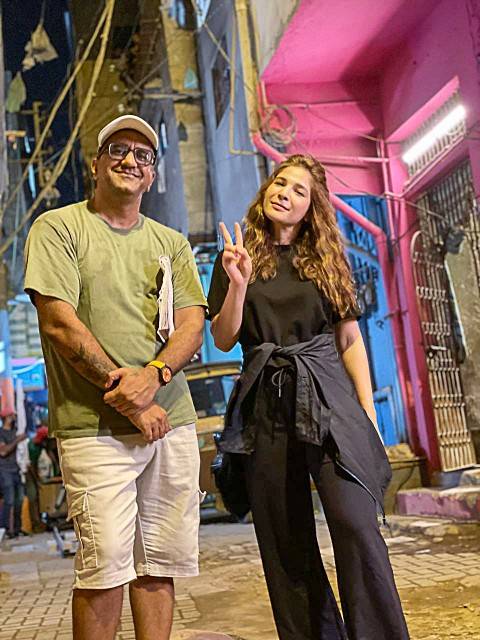
“I noticed that the strongest trend among girls in Lyari was actually football rather than boxing, rap music, or any other sport." - Abu Aleeha
The result is a film that sits in a delicate space between representation and construction. The characters are shaped, but their essence is borrowed from life. That same balance extends into how the film holds its emotional threads. While Mera Lyari follows the journeys of three central girls, it is equally invested in the environment around them and the figures that influence their growth.“I believe girls in our society have to struggle constantly to prove themselves, whether against societal expectations or sometimes even within their own parents and families. So Lyari becomes a metaphor for that wider reality.” The challenges faced by girls in proving themselves, in navigating societal expectations and limitations, are not confined to one locality. They exist across cities and small towns alike.“I don’t think this struggle belongs only to Lyari,” he says. In that sense, Lyari becomes representative of a broader social reality. By framing the story through three girls, he aims to universalise their experiences. “If you see them as representing every girl in Pakistan, then you understand that these challenges are faced by all.” The screenplay, therefore, does not prioritise one emotional thread over another. Instead, it uses intimacy to speak to something collective. Guiding performances within that framework required a different approach, particularly given the presence of non-actors and community participants. “For me, it is not a director’s job to teach acting, nor do I think I can teach it. What I can do is provide guidance, give references, and help actors come as close to reality as possible within my vision, the script, and the story I have created for the film.” His focus, instead, is on direction and alignment, helping performers understand who their characters are, how they think, and how they exist within the world of the film. In the case of Mera Lyari, that process involved immersing actors in real environments, introducing them to local girls, and conducting workshops that allowed them to absorb behavioural nuances rather than perform them artificially. The goal was not to create performances from scratch, but to bring them closer to reality. This commitment to realism also shaped his visual and tonal decisions. Abu Aleeha is acutely aware that Lyari has been depicted on screen before, most notably in the 2015 film ‘Shah’ by Adnan Sarwar, which he still considers one of his favourite films. He also acknowledges other regional works like the Lyari-based Balochi film ‘Doda’. Rather than attempting to reinvent or compete with those portrayals, his challenge was to avoid repetition while remaining truthful. That meant resisting both stylisation and sensationalism, and focusing instead on observation and restraint. His previous experience with ‘Daadal’ had already exposed the tensions between creative intent and commercial pressures. He describes that project as one where external demands led to compromises, resulting in a film he was not fully satisfied with. In contrast, Mera Lyari offered complete creative freedom, something he credits as essential to achieving the film’s tone. “If there is anything good in this film, it is the result of everyone’s collective effort,” he says, while also taking full responsibility for anything that may not work. At its core, the film grapples with a question that extends beyond narrative. How do you portray struggle without reducing it to spectacle, and how do you offer hope without diluting truth. For Abu Aleeha, this was perhaps the most difficult emotional balance to achieve. “When I was writing this script, I wanted to keep it very real, very close to reality. But generally, if you look at Pakistan, people who make art-house or independent films often face the accusation that they highlight society’s flaws only to win awards abroad. The same criticism has been made about filmmakers like Saim Sadiq for ‘Joyland’, Sarmad Khosaat for ‘Zindagi Tamasha’ and even Sharmeen Obaid-Chinoy,” he speaks about the criticism often directed at socially driven cinema in Pakistan. “I felt I wanted to tell a story where I address the issues and problems in society, but then also offer a meaningful solution at the end. So Mera Lyari shows the challenges a girl faces, but it also tries to provide hope and a way forward,” he explains. This intention shapes the film’s structure, particularly its ending, which he considers his favourite part. Rather than escalating conflict for dramatic effect, he chooses to resolve it through realism and possibility.
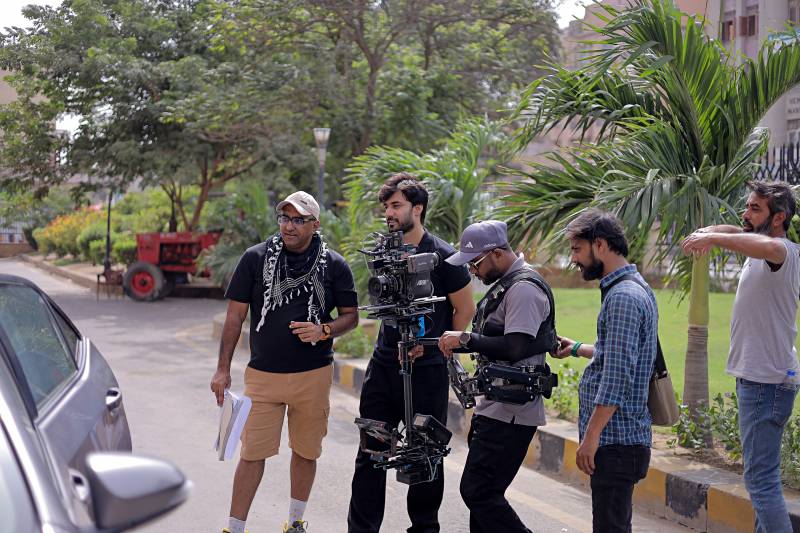
"I tried to keep it realistic and end with hope, the hope that there is a path through which every girl can achieve her dreams, and can also show her life partner or her parents that they can help her fulfill those dreams.” - Abu Aleeha
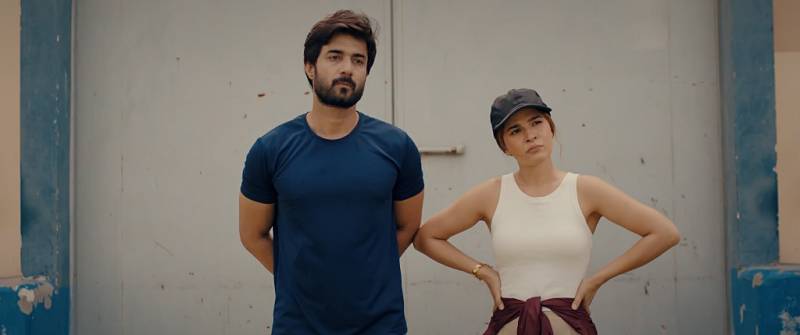
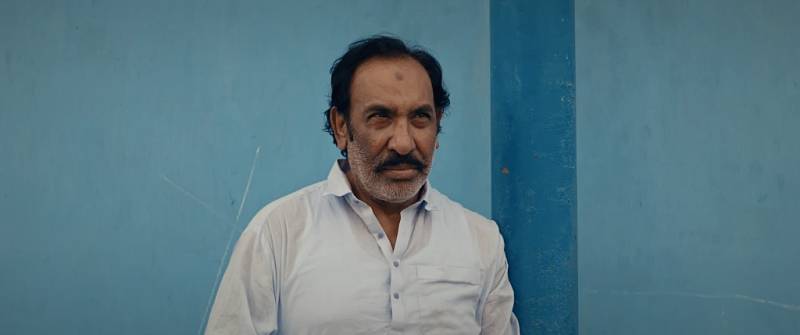
The film acknowledges the challenges girls face, the resistance they encounter from society and sometimes even from within their own families, but it also highlights the presence of support. Men who stand by their daughters, sisters, and wives. Systems that can shift, however slowly. “That was a difficult decision, because in trying to create thrill or excitement, you can easily sensationalize things and force a dramatic climax. Instead, I tried to keep it realistic and end with hope, the hope that there is a path through which every girl can achieve her dreams, and can also show her life partner or her parents that they can help her fulfill those dreams.” In the end, the film does not claim to represent Lyari in its entirety. It does something more specific. It tells a small story, of a few girls, and uses it to reflect something much larger. A possibility.
Interview: Safa Adnan
Images & Coordination: Hawks Bay Productions