
WHERE STORIES FIND THEIR SOUL | MEHREEN JABBAR | THROUGH HER LENS
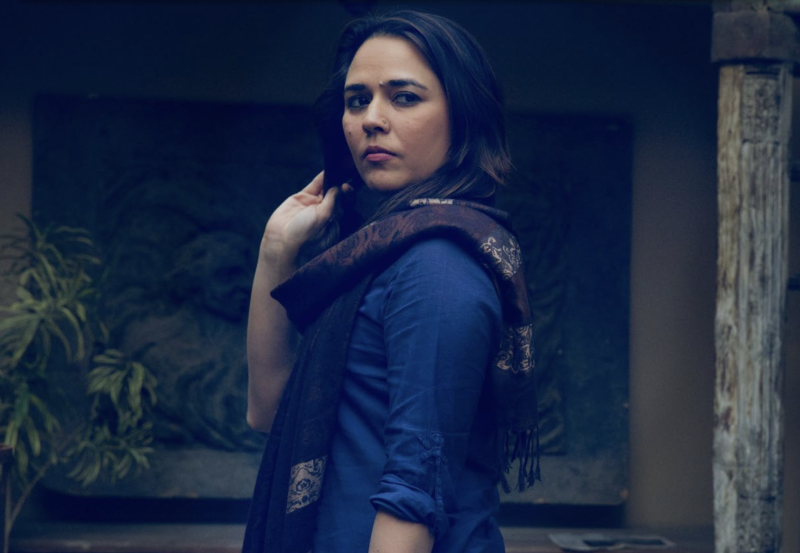
Few filmmakers have influenced the landscape of Pakistani television and cinema quite like Mehreen Jabbar. For more than two decades, she has built a remarkable body of work defined by emotional depth, authenticity and an unwavering commitment to telling stories that resonate long after the credits roll. Whether through acclaimed dramas such as Daam, Doraha and Jackson Heights, thought-provoking projects like Ek Jhooti Love Story and Nadaan, or her latest serial Dr. Bahu, Jabbar has consistently challenged convention with storytelling that is intimate, layered and deeply human. Widely regarded as one of Pakistan's most accomplished directors, she continues to shape conversations through narratives that value substance over spectacle. In this exclusive conversation with HELLO! Pakistan, Mehreen reflects on her return to long-form television, the evolution of the entertainment industry, the realities of working behind the camera, and the passion that continues to drive her after decades behind the lens.
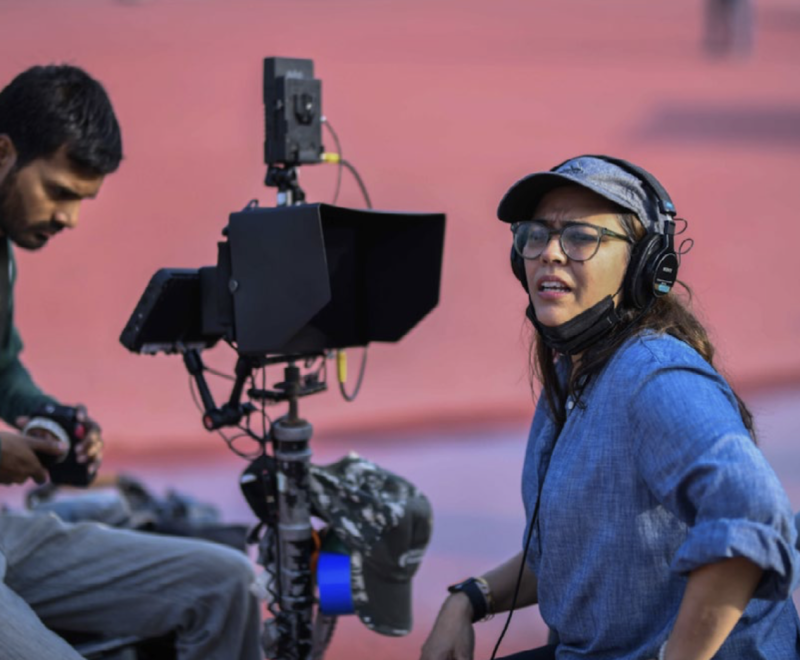
You had been exploring shorter-format storytelling before Dr. Bahu. What was it about this script that convinced you it was worth committing to a full-length television drama?
What convinced me about Dr. Bahu was that it was a very layered script about multiple characters, and it dealt with very important themes. On the surface, it felt like a normal family drama, but if you dug deeper, there were themes of patriarchy, individualism, a new marriage, compromise, identity and independence.
There were a ton of themes that were covered in a very non-preachy, non-dogmatic way and were effortlessly weaved into the character storylines by the writer, Sanam Mehdi. That’s why I was immediately drawn to it, because there was more to the script than meets the eye.
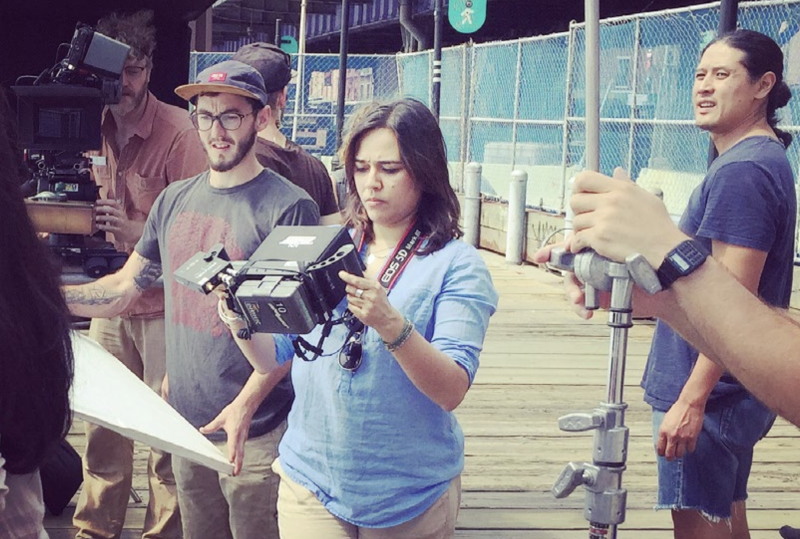
The title initially suggests a conventional family drama, yet the narrative explores ambition, control, marriage and identity with much greater nuance. How did you ensure those quieter themes weren't overshadowed by the commercial expectations attached to the genre?
Initially, when Nadeem Baig, who is a wonderful director, and Six Sigma, the production company behind the project, along with Humayun Saeed, convinced me to take on this project, they felt that I needed something commercial.
It had been a while since I had done a long-form serial, almost eight years, so they felt this would be a great vehicle for me to return to long-form storytelling.
It had that rare combination of a storyline that had depth and nuance, while also being commercially viable and able to appeal to a vast cross-section of people. The quieter themes are perhaps just part of my style of storytelling, which I have followed over the years, and that approach blended well with this project. That’s how I like to tell stories, in a quieter way.
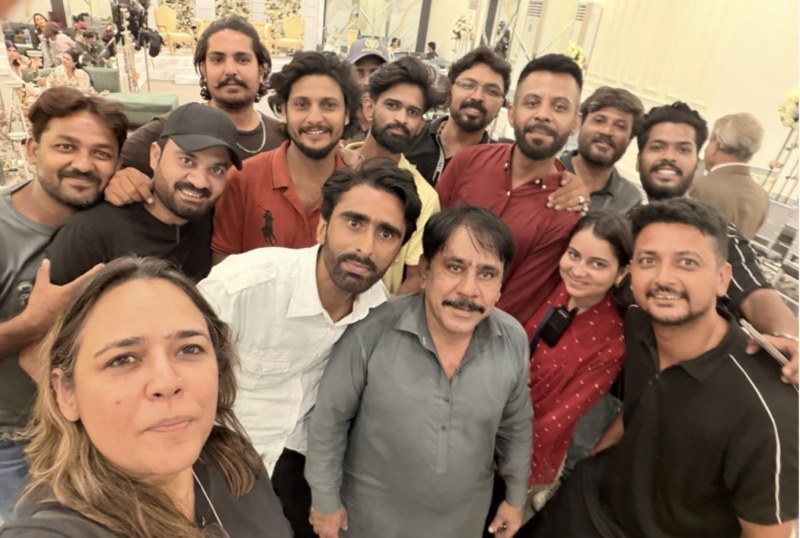
You have witnessed Pakistani television across several decades. What excites you most about today's industry, and what concerns you the most?
What excites me about the current state of the industry is that it has a much, much wider reach than ever before. When I started, there was no social media and there were only two channels. Now, platforms like YouTube especially offer the opportunity to reach audiences that you may not have reached before. It’s not just about Pakistan or the Pakistani diaspora anymore, but also the wider South Asian diaspora and even audiences in other countries because content is now subtitled. Whoever relates to our storytelling can watch it and understand it. So that’s exciting. The other thing is that a lot of dramas are being made, so it’s a booming industry. It’s exciting because it provides more opportunities for new talent, new crew members, people working behind the scenes, actors and storytellers. It’s the most vibrant industry we have right now in media, and that’s what excites me. What concerns me is that we shouldn’t stop growing. I feel that production companies and channels should not think that because these dramas are doing so well, getting millions and millions of views, and being appreciated, there is no need to invest in the things that still require change, especially the way productions are done. Our industry needs a lot of development and progress on that front.
The way productions are managed and handled is not at international standards, which I understand because we are a much smaller industry, but there is far greater professionalism and organisation that can come into drama production, and that rarely exists right now.
That concerns me because there is so much work happening, and because these dramas are so well received, sometimes there is no inclination on the part of producers and channels to really improve working conditions.
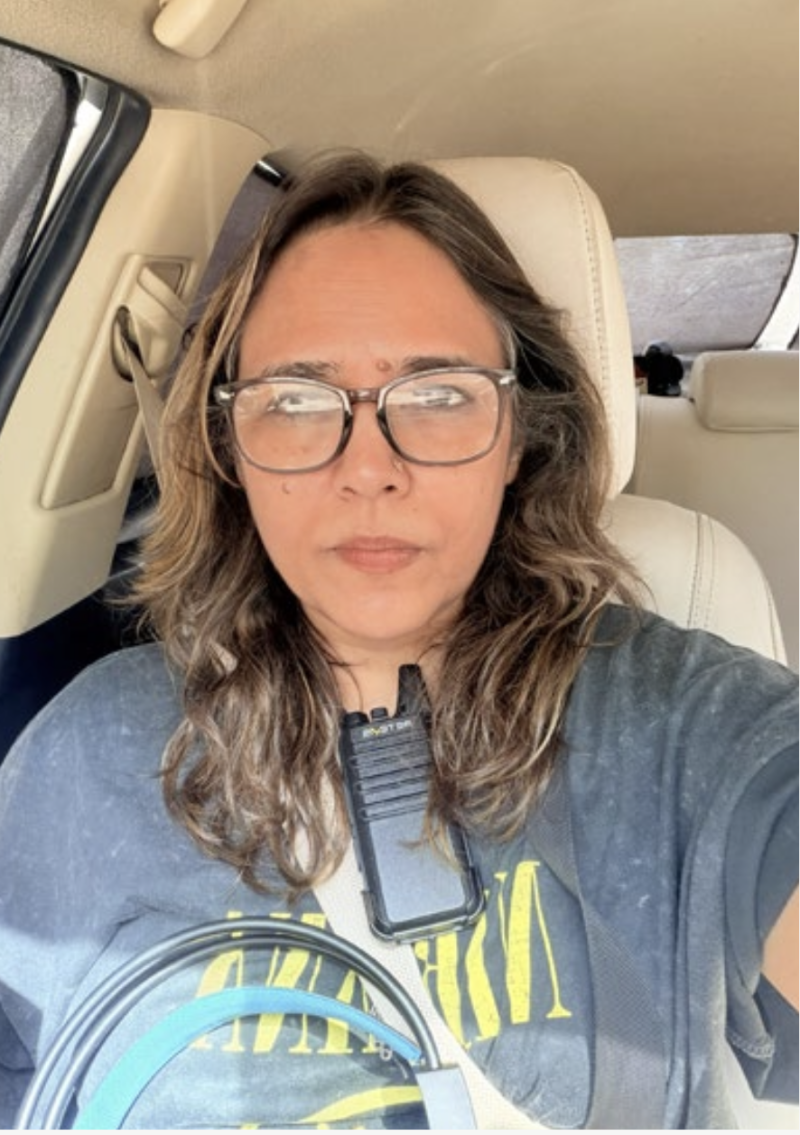
Many viewers feel audiences today are far more vocal because of social media. Has instant public reaction changed the way you experience releasing a project?
It has definitely changed the viewing experience because, again, when I started out, the response wasn't immediate. You found out either through word of mouth or from articles written in newspapers and magazines. Right now, it's instant. You receive all kinds of reactions, and there's no filter system. You can be abused and tormented, or you can be praised. It's such a gamut of experiences that you get to witness from different audience members from all over. It's literally serotonin from one comment and absolute depression from another. I don't know if it's changed the way I make projects, but it's definitely changed the way one reacts to commentary and criticism. Over the years, I've become more aware and more accepting of letting things go without allowing them to affect me as much. I think that comes with experience and growing older, where you don't take every single thing so seriously. At the same time, I still try to learn and acknowledge the areas where I could have done better. That's always been my approach.
I take constructive criticism on board and recognise when I've made a mistake, but the kind of criticism on social media that is simply mean or superficial, I just read it and move on.
You have been one of Pakistan's most respected female directors for years. Have the opportunities available to women behind the camera genuinely improved, or is there still significant ground to cover?
Unfortunately, while there are women directors, apart from me of course, who have been doing really good work for a number of years, I don't see a large new crop of women entering direction. There are certainly more women on the producing side, in content teams and at television channels, but far fewer in crew positions, whether as assistant directors, line producers or directors. One of the reasons is that it remains a highly male-dominated industry behind the scenes, especially on sets. There are very few female assistant directors, and departments such as camera and lighting are still very male-centric. It takes a great deal of courage, commitment and passion for a woman to enter those spaces. It absolutely can happen, and some women have done it, but the environment can feel quite cliquish. Crews are either in-house or hired through production companies, so it can be challenging to break into those circles. Unfortunately, drama crews behind the scenes are also not paid particularly well, which adds another challenge. I believe we can do much better when it comes to hiring technicians and training assistant directors, line producers and producers. Interestingly, there are far more women working behind the scenes in the advertising industry, perhaps because the projects are shorter, the pay is significantly better and the production structure is different. At the same time, I think it's important to acknowledge the women who have paved the way. Directors like Angeline Malik, Shehrazade Sheikh, Marina Khan, Sakina Samo and Saima Waseem have all made meaningful contributions to the industry. More broadly, this isn't just a challenge in Pakistan. Even globally, whether in the US or India, women still make up a relatively small percentage of the directing pool. It's something I hope continues to change, because I believe we need many more women behind the camera.
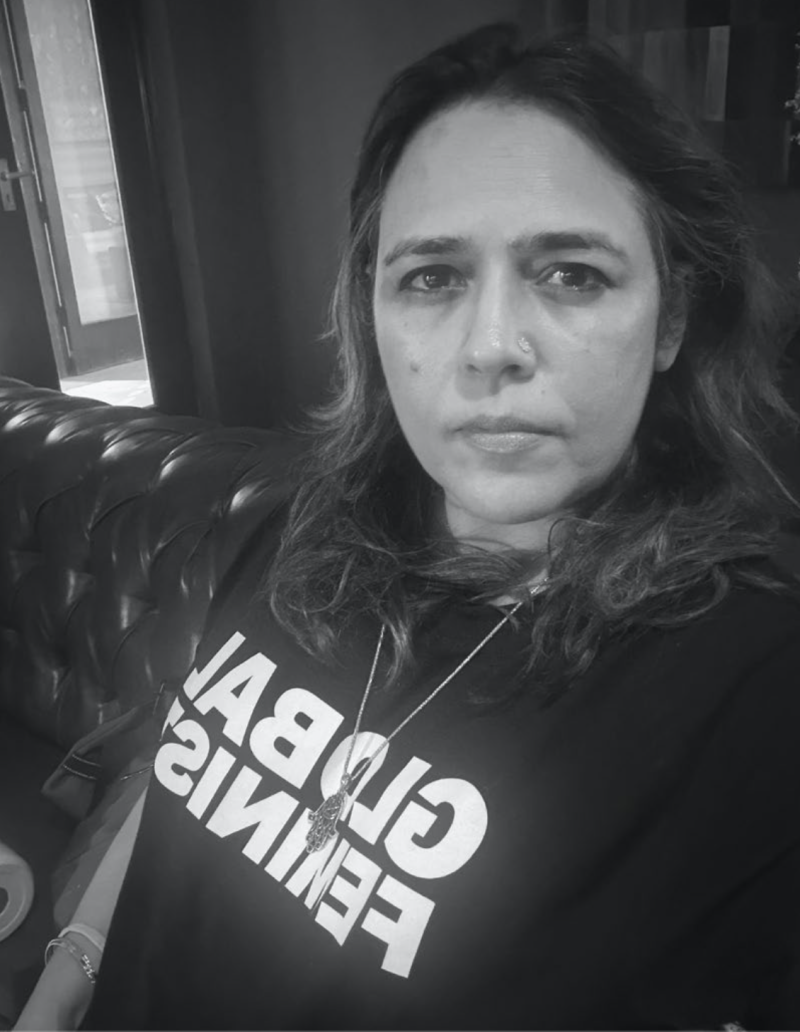
As a woman who has built a remarkable career in a highly competitive industry, what does empowerment mean to you today, and has that definition changed over the years?
For me, empowerment means being treated as an equal in my industry. It means not being pandered to or condescended to, but being judged on my ability, the way I work, what I deliver and what I bring to a project. For me, feminism has always been about equal rights and nothing else. Equal pay, equal opportunity. At its core, it's about basic human rights, and that definition has always stayed with me. While things have certainly improved over the years, with more women entering the workforce and more young women pursuing careers in this industry, it is still a male-dominated field. There are also more colleges and universities teaching film and television today than there were 25 or 30 years ago. Even so, many women probably still don't know how to take that first step into the industry or how to build their place within it, so I wouldn't say it's a walk in the park. That said, opportunities have definitely increased, and there is now greater access to people in the industry. Many aspiring professionals reach out to me through Instagram or email, and I've ended up working with some of them for years, whether as assistant directors or actors. Those possibilities exist now in a way they didn't before, and sometimes they lead to really meaningful professional relationships.
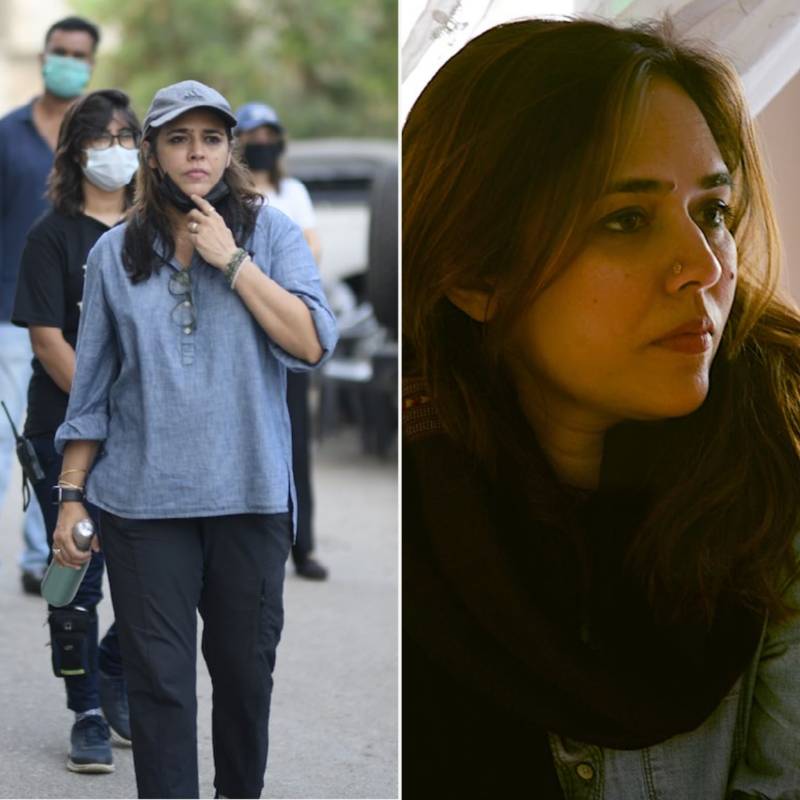
Actors frequently speak about the freedom they feel while working with you. What does your directing process look like once the cameras start rolling? Do you encourage improvisation or do you prefer sticking closely to the script?
Working with actors is, for me, mostly about giving them absolute freedom. I really believe that for a good actor to shine, you have to get out of their way. We discuss the script and the character in depth, and as long as we're aligned before the cameras start rolling, my job is simply to know where to place the camera. If there's something that doesn't quite gel with what I feel a scene or a reaction should be, I discuss it with the actors. I'm completely open to improvisation. I'm not someone who insists that every single word has to be delivered exactly as written. As long as the emotion is being conveyed and the scene is moving the story forward, I encourage improvisation and experimentation. More importantly, I don't want to tell actors how to act, because good actors, when you're all on the same page, can surprise you and bring real magic to a scene.
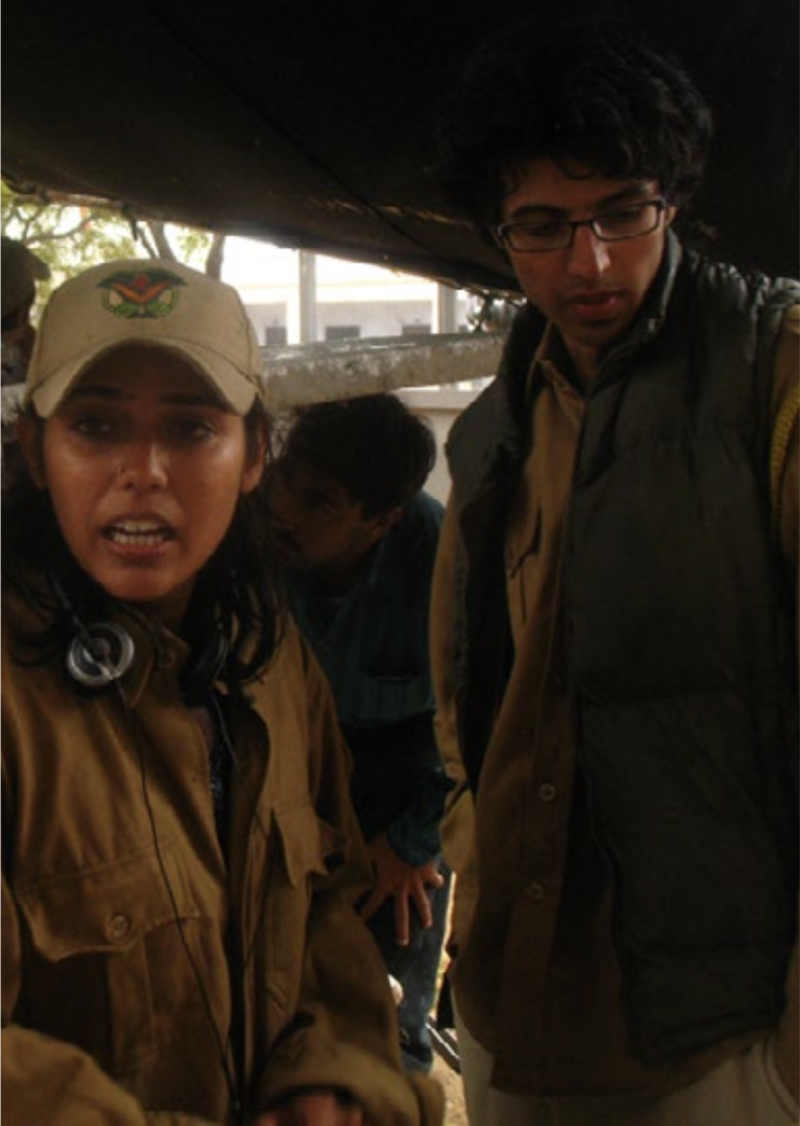
Looking back at projects like Daam, Doraha, Jackson Heights, Ek Jhooti Love Story and now Dr. Bahu, what aspects of your storytelling have evolved the most and what have you consciously refused to compromise on?
I've always been drawn to storytelling that is intimate, observational and feels like a quiet window into people's lives. That's my style, and it's something I've developed over the years. The films that inspired me when I was younger and wanted to get into this profession were European films, Satyajit Ray's work, Salaam Bombay! and Iranian cinema. I was always drawn to that kind of neorealism and realistic storytelling, and that's a style I continue to embrace. What has evolved over the years is that, after directing for so long, I feel much more comfortable with the craft. At the same time, I also want to challenge myself because it's easy to become too comfortable and feel like you can do things with your eyes closed. I believe it's important to keep pushing yourself. I have tried to experiment, whether it was directing thrillers in my short-form projects, which was a lot of fun, or Nadaan, which explored mobs and mob behaviour. Those were very different themes, and that's what I want to continue doing, exploring different subjects while remaining true to my style of storytelling. As for compromise, this industry is built on compromise in many ways. It's far from a perfect system, and it's honestly a miracle that projects come together the way they do because everyone, from directors and actors to the crew behind the scenes, works under conditions that are often far from ideal. We all end up compromising on something. But if there's one thing I try not to compromise on, it's the emotional truth of a scene or a particular visual that I strongly believe in. Even then, television is always a balancing act and a process of constant negotiation.
After such an accomplished career, what still excites, or even scares, you enough to say yes to a new project?
What excites me most is simply being on set. I love being on set, and I always have. I've spent so many years on sets, from my days as an intern, when I would just hang around television commercial shoots at M&J Communications, to where I am today. I've lost count of how many sets I've been on over the years. It's where I feel most alive. Telling stories is exciting, and so is collaborating with people who are all working towards the same goal. At the same time, every new project is scary because you never know how it's going to turn out or how it will be received. That's always a huge question mark. It doesn't matter how much money goes into a project because even the best intentions, the best script and the best camera can't guarantee a hit, while the most unexpected projects sometimes resonate the most. It's always a guessing game, and that's both exciting and frightening. What I'm especially excited, and admittedly nervous, about is making my third feature film, which I really hope materialises. If I have one wish, it's that I had made more films over the years. That's something I still hope to do, and it's a challenge I'm genuinely looking forward to.
If you could revisit one of your earlier projects with everything you've learned today, would you change anything or would you leave it exactly as it is?
If I were to revisit an earlier project, it would be Nivala, which was the very first project I directed. It was based on an Ismat Chughtai short story, and it remains an absolutely wonderful story. I have very fond memories of making it. We shot entirely on location in Kharadar, and I was actually on crutches throughout the shoot because I'd broken my toe just two days before filming. We were shooting in buses and mohallas, so it was certainly an experience. Looking back now, with everything I've learned over the years, I know I would approach it very differently and, hopefully, do it much better. So Nivala would definitely be the project I'd revisit.
Interview: Safa Adnan
Photos: Courtesy Mehreen Jabbar